Medical Animation: Explaining a Device That Can Correct a Dangerous Heart Rhythm
Here's a fun one to sit with for a second: you've just been told you need a small device implanted in your chest that, if your heart ever slips into a dangerous rhythm, will deliver an electric shock to fix it. What's the very next thing most people do? They go home and Google it. At 2am. Alone. Which is roughly the least reassuring way to learn about your own diagnosis.
That's the actual problem the British Heart Foundation (BHF) brought to us, and it's a pretty good example of what medical animation is for. If you're not familiar, BHF is the UK's leading heart and circulatory disease charity - funding research, running patient support services, and publishing the health information millions of people turn to the moment they get a diagnosis like this one.
Cardiovascular disease still kills someone in the UK roughly every three minutes, which is exactly why "please stop people frightening themselves with forum posts about their new implant" is a genuinely serious brief, not a nice-to-have.
We're Leon!, a small remote animation studio that started out in London and now works out of a rural Spanish pueblo, making charity animation, nonprofit animation and healthcare animation for organisations worldwide.
Medical animation specifically is quietly becoming one of our favourite corners of that world to work in (turns out explaining the human body clearly is a genuinely useful skill, who knew). Over the course of a year or so, we made three explainer videos for BHF: one on ICDs (implantable cardioverter defibrillators), one on pacemakers, and one on how the heart works in general. This is the story of all three.
Why Do Health Charities Need Medical Animation?
BHF's Health Content team, including cardiac nurses on staff, already had a handful of animations covering topics like ECGs and angiograms. Solid stuff. But ICDs and pacemakers are a different level of "please don't get this wrong": these are aimed at people who've just found out they need a heart device implanted, at exactly the point they're most anxious and most likely to spiral into a WebMD rabbit hole.
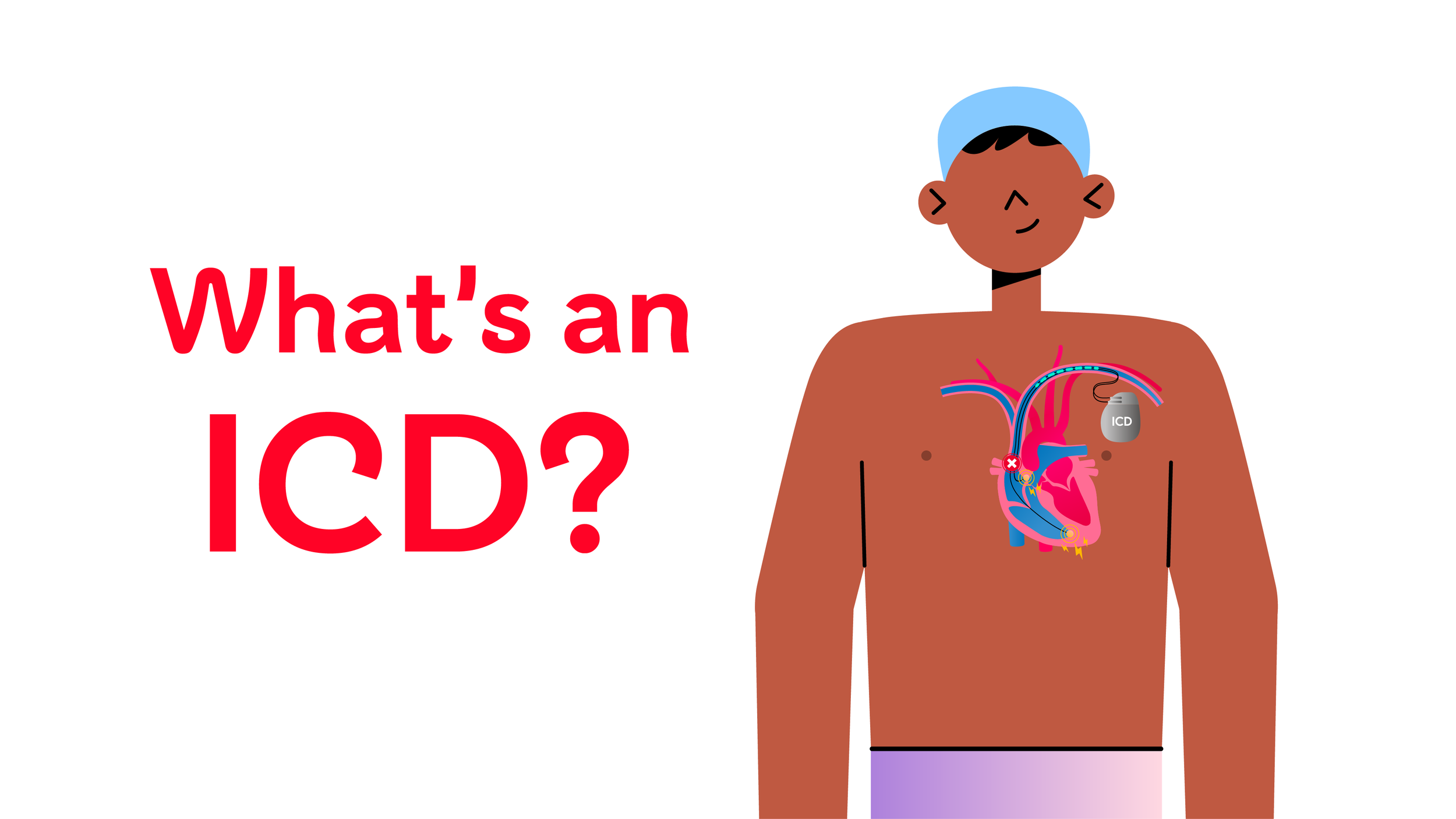
Megan had worked with Leo before on the MyChart videos at Guy's and St Thomas' NHS Trust, and recommended us to the wider BHF team. From there it became a proper three-video commission: ICDs, pacemakers, and a general "how does the heart even work" explainer, each signed off by a clinical team who take accuracy exactly as seriously as you'd hope people making medical animation for a national heart charity would.
Our Medical Animation Solution
Three medical explainer videos, in BHF's own "big-limb, gradient" character style, each doing a specific job:
ICDs - what the device does, how it's fitted, what recovery actually looks like
Pacemakers - same brief, different device, different mechanism, entirely different set of clinical rules
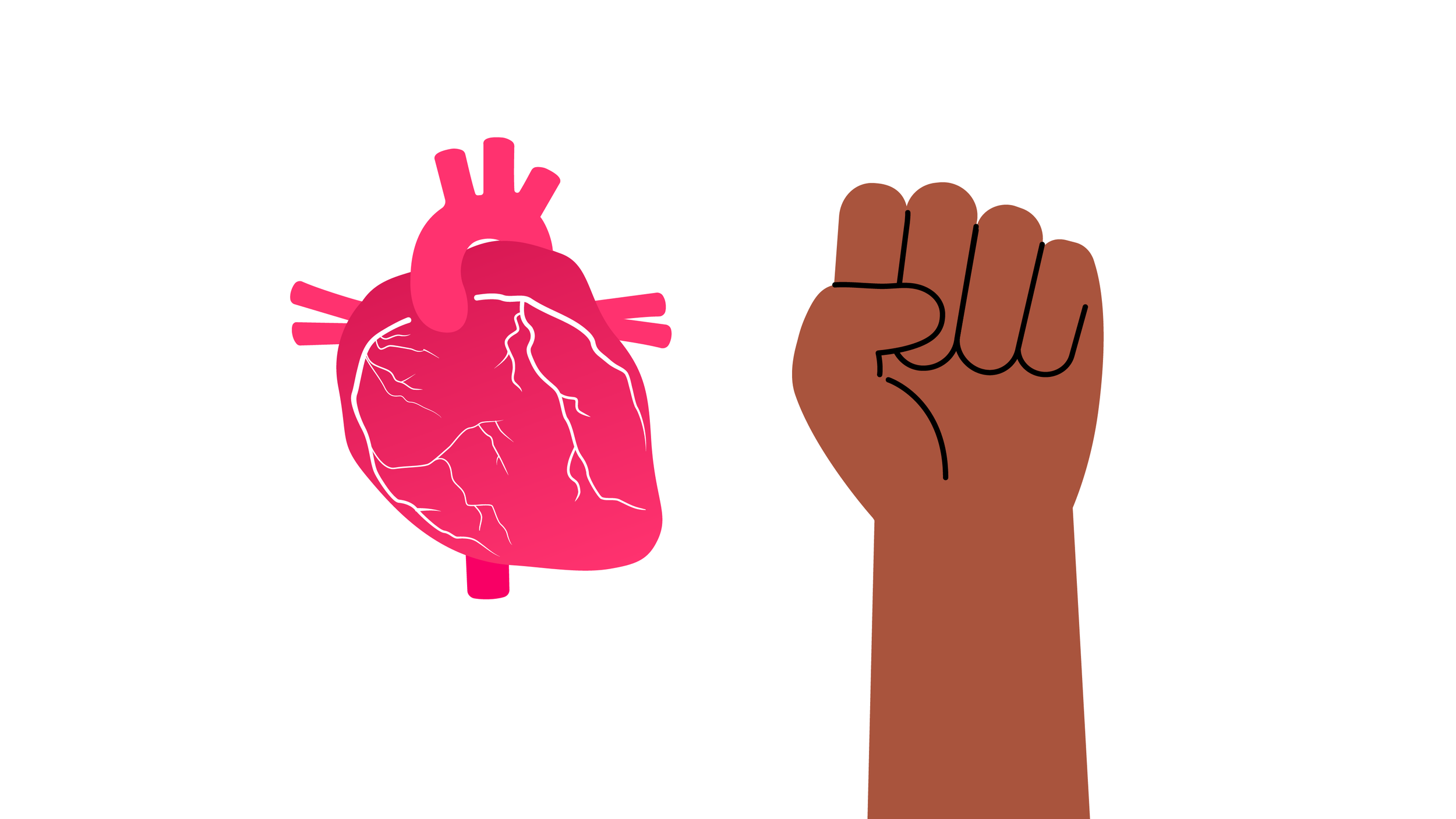
How Your Heart Works - the full anatomy tour: chambers, valves, muscle layers, coronary arteries, and yes, the "100,000 beats a day" fact everyone loves quoting at dinner parties
Style-wise, each video stuck to warm, human character animation rather than dry stock-footage-style medical diagrams, because a device that can correct a dangerous heart rhythm deserves a calmer bedside manner than a PowerPoint slide. It's the same charity animation and nonprofit animation thinking we bring to every project - simple, human, accurate - just pointed at high-stakes clinical information this time.
Our Medical Animation Process
Yes, We're Animation Nerds Who Argue About Where a Heart Valve Should Sit
Workflow across all three: script, mood board, storyboard, animation, voiceover, final files. Standard stuff on paper for a studio like us, part of the animation studio services we've built our process around over the years. Less standard when your reviewers are actual cardiac nurses who will, quite rightly, pull you up on the spot if you draw a heart lead in the wrong chamber - and they did, more than once, in the best possible way.
That's just what proper medical animation review looks like: every script line and every diagram gets checked by someone whose actual job is knowing when a heart looks wrong, not just whether it looks nice.
Worth saying plainly: the script is the foundation here, everything else gets built on it. On a project like this, the words get agreed, argued over, and clinically checked long before anyone's drawing a heart valve, because a beautifully animated wrong sentence is still wrong. Get the wording right first and the visuals tend to sort themselves out.
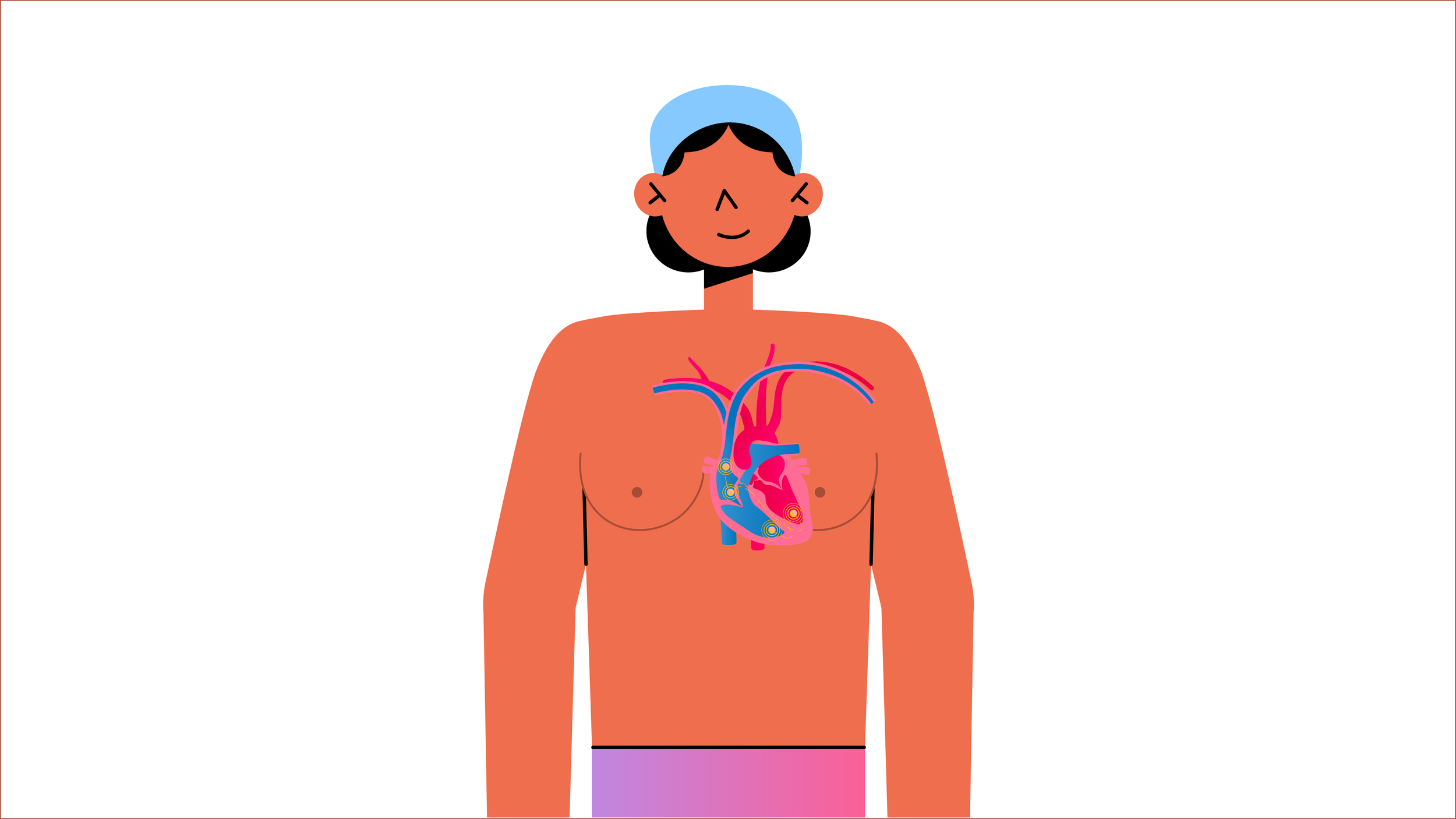
A Few Things That Genuinely Surprised Us
There was a proper debate over whether the heart's protective outer lining, the pericardium, should be shown as one of its layers, because it turns out that only three of the heart wall's four layers are actually muscle. Cardiac nurses: correcting animators since forever.
Voiceover casting got its own level of scrutiny. For "How Your Heart Works," BHF specifically wanted a regional UK accent rather than standard RP - and our go-to voice artist Elizabeth Ollier, who we'd always cast assuming pure Received Pronunciation, turned out to be from South Manchester under a few childhood elocution lessons. She recorded a second, regional take just for this one.
We even built a test heartbeat animation at seven different speeds before landing on the one that reads clearest on screen, which is nowhere near an actual resting heart rate, because apparently real hearts beat too fast for comfortable viewing. The things you learn making explainer animation for a living.
Committees with more opinions than a family WhatsApp group? Absolutely, and every single one of those opinions came from someone whose actual job is knowing when a heart diagram is wrong, so we wouldn't have it any other way.
Did It Work?
All three videos are live on BHF's YouTube channel and embedded across the relevant bhf.org.uk pages, complete with subtitle files, thumbnails, and editable vector illustration assets so BHF can keep reusing the artwork elsewhere.
What BHF Said
Here's what Bridget, BHF's Health Content Creator, said in our post-project feedback survey. Asked what she liked about working with us: "The speed of delivery and responsiveness from Leo." And on the finished series overall: "The speed of delivery. Accommodation of our sign off process. Quality of the finished product. Flexibility." She rated it 5 out of 5, with "nothing" listed under what she'd change.
We're currently back at work with BHF on a new video about their CVD Observatory, so evidently the ICDs-pacemakers-hearts trilogy didn't put anyone off.

Charity animation, nonprofit animation, healthcare animation, medical animation - call it what you like, it's genuinely the whole business for us, not a sideline we bolt onto corporate work when a health client wanders in.
If you're a health charity, hospital trust, or research body with something complicated and clinically sensitive to explain, and you'd rather not gamble it on a generalist studio's first attempt at a heart valve, get in touch and let's talk about your project.