Best Nonprofits on Twitter (X) 2026
We first mapped out the top charities and nonprofits on X back in 2024, so it felt like time for another look.
X rewards a hook. That hasn't changed since the Twitter days. Something strong enough to survive a feed built for arguing. So we went looking for the charity and nonprofit posts that managed it without losing the plot in the replies.
We pulled the numbers to find out.
The Top 10 Nonprofits on X
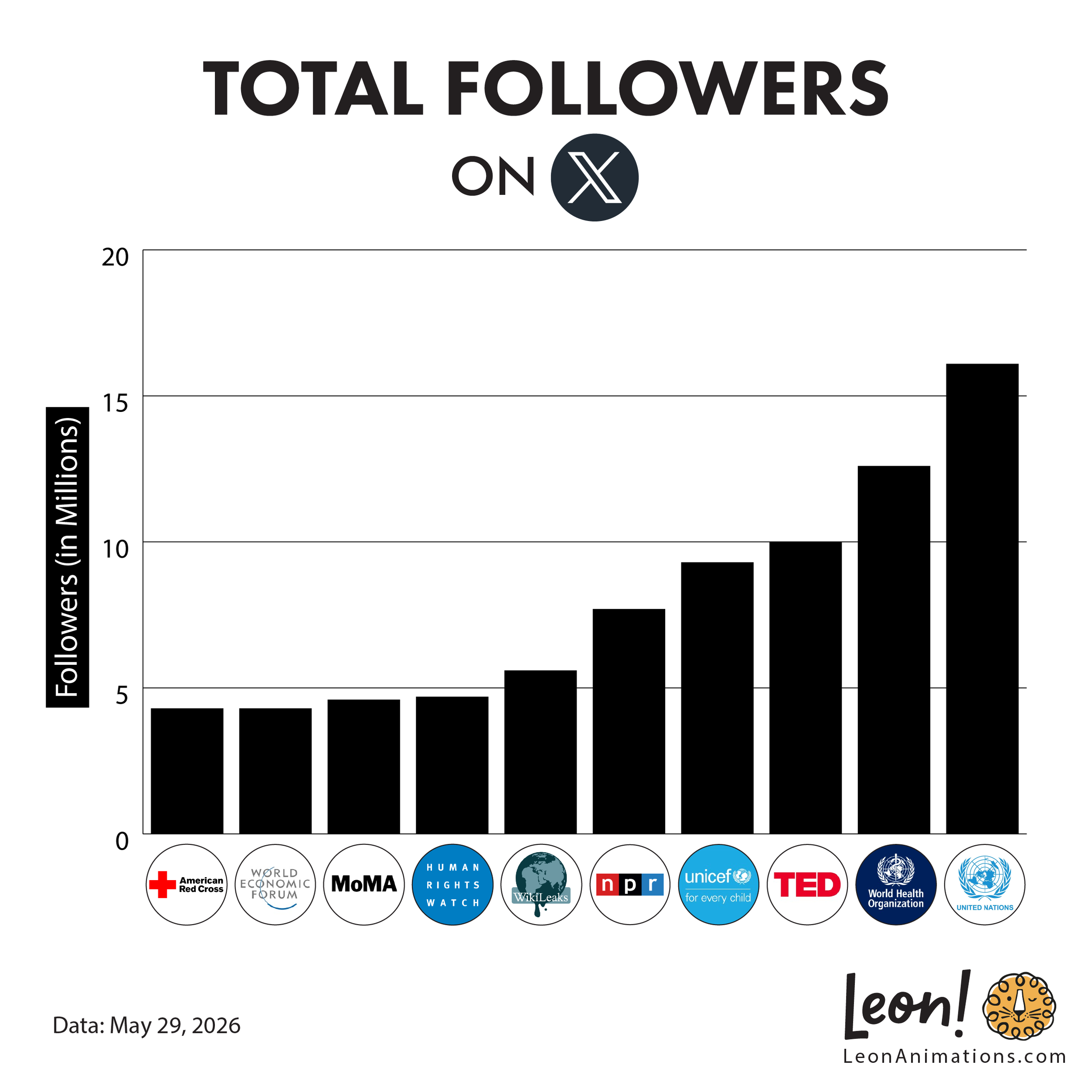
The ten largest nonprofit and public-sector accounts on X by follower count, as of May 2026:
The UN sits well clear at the top, with WHO and TED close behind. Past that, the list is a genuine mix: media outlets like NPR, cultural institutions like MoMA, and advocacy groups like Human Rights Watch and WikiLeaks, alongside UNICEF and the American Red Cross.
Worth flagging, too: several major nonprofits have gone quiet on the platform since Elon Musk's 2022 takeover, some drifting over to Bluesky instead. That's less about engagement and more about politics. NPR is the clearest example on this very list: 7.7 million followers and not a single post since April 2023, when it quit in protest at Twitter labelling it 'state-affiliated media'.
Even so, the charities and causes still actively posting on Twitter/X are pulling in real views, likes and comments. Whatever else is going on around the platform, it still delivers reach for nonprofits willing to use it.
Standout Posts
UNICEF: A 90s-Inspired History of Feeding Children
UNICEF, the UN's children's charity, marked the 30th anniversary of ready-to-use therapeutic food, a peanut-paste treatment that lets malnourished children recover at home instead of hospital.
UNICEF pitched that history as a forgotten 90s trend: the Macarena, brick mobile phones, old box-shaped CRT TVs. Rapid zooms, footage duplicated into collage grids, oversized retro typography. It's live footage and archival clips, cut fast and dressed loud.
The payoff is real: 9 in 10 children treated with it recover within weeks, and UNICEF now delivers close to a billion sachets a year. "Saving lives never goes out of style," the video closes. The 90s framing was the hook, the substance underneath it is real.
UNDP: Sustainable Gastronomy Day
Nine seconds. No voiceover, no dialogue, no statistics. Just hand-drawn animation, rough textured outlines, crayon-like colour, an ingredient moving from a grocery bag through a mortar and pestle into a finished dish.
This is the one post on this list that's actually animated. In just nine seconds it still lands its point clearly: sustainable gastronomy is about more than what lands on your plate. Saying one thing well is often the better nonprofit social media strategy than trying to fit everything in.
"A great reminder that sustainability isn't just something we learn about, it's something we practice every day, including through our food choices," one commenter wrote.
UNICEF x Greg Goya: Play Is Everywhere
For International Day of Play, UNICEF partnered with artist Greg Goya to respond to a real problem: opportunities for outdoor play are disappearing, especially in cities. Rather than just saying that, they installed four games directly into public spaces, a painted dance floor, a street basketball hoop, pavement markings, and filmed what happened when real people stumbled onto them.
No sets, no scripted testimonials, just proof that a charity X post doesn't need a production budget to work. Just people of every age actually playing, because someone put a reason to in front of them.
The comments on this one didn't add much worth repeating, but the footage does the job on its own: "Play is everywhere" reads less like a slogan and more like a fact the video just proved.
What Can We Learn From This?

Three posts, three completely different tools. UNICEF's RUTF video is live footage edited into something that feels animated without actually being it. UNDP's food piece is proper hand-drawn animation, and it needed almost no time at all to land. UNICEF's play campaign is just a camera pointed at something true happening in public.
None of them are doing the same job, and that's the point. A consistent house style still matters, it's how people recognise your work before they've even read it, but it shouldn't be the only thing deciding the format.
Sometimes the moment calls for nine seconds of animation. Sometimes it calls for a camera and a good idea installed on a street corner. That's really the whole of social media for charities on a platform like this: let the moment decide the format, not habit alone.
Whether it's Twitter, X, or whatever the platform's called by the time you read this, this is the work Leon! Animations does day to day: charities, nonprofits, NGOs, NHS trusts, and healthcare and public sector organisations, including the UN and IOM. Social media for nonprofits keeps changing shape, the thinking behind it doesn't.
Got a video that needs this kind of thinking? Come talk to us