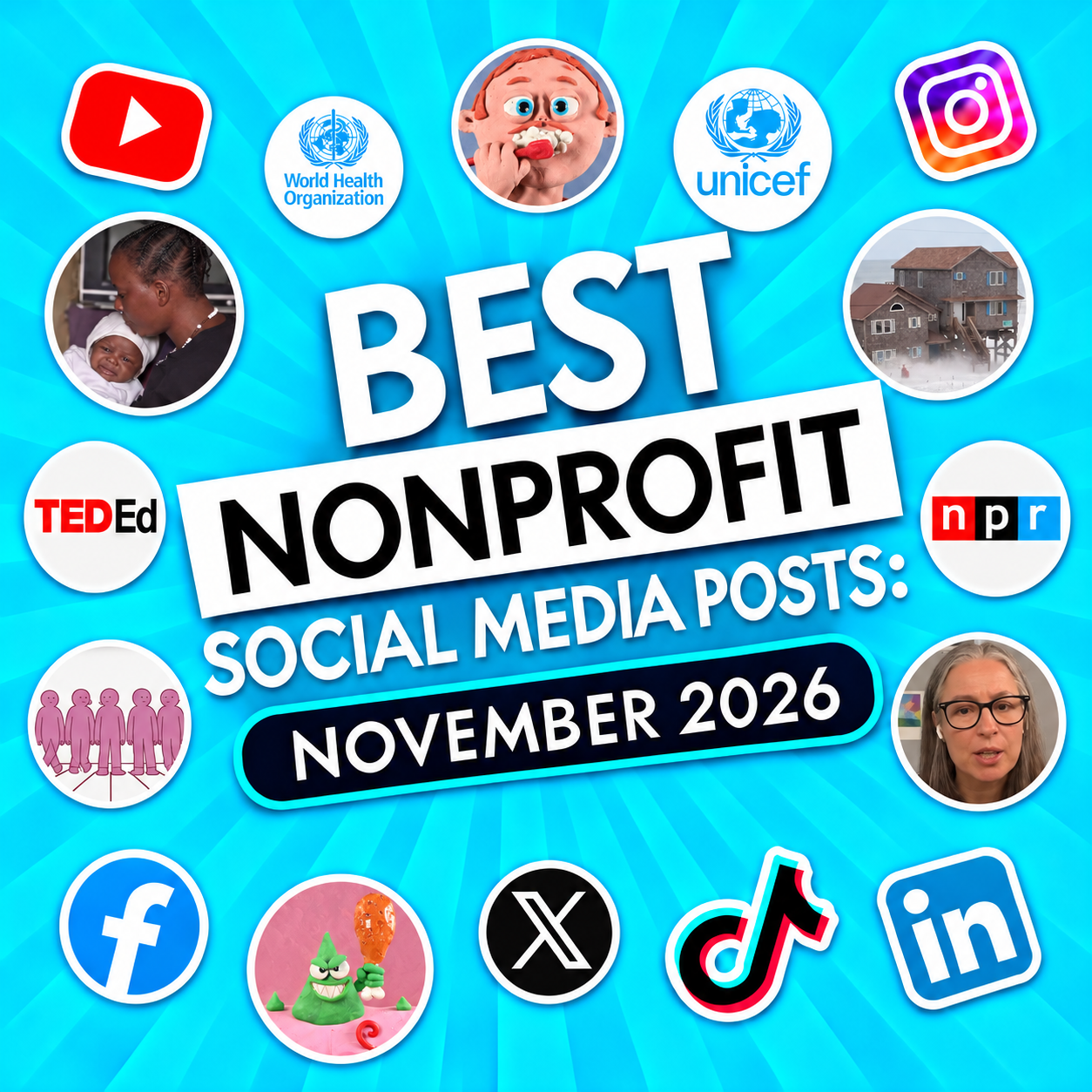
The most popular nonprofit social media posts we found between World Mental Health Day (10 October) and early November 2026 include NPR on TikTok and Facebook, UNICEF on Twitter (X), NPR’s TED Radio Hour on Instagram, TED-Ed on YouTube and WHO on LinkedIn.
Houses falling into the sea, a baby who survived Ebola and a mouth full of microbes: that’s what people were watching on charity social media this month.
How we picked: from the big nonprofit accounts we checked, we took the most popular post on each platform (views where shown, otherwise likes or reactions). NPR’s coastline video came top on both TikTok and Facebook. We could have picked a runner-up to make six different posts, but rules are rules.
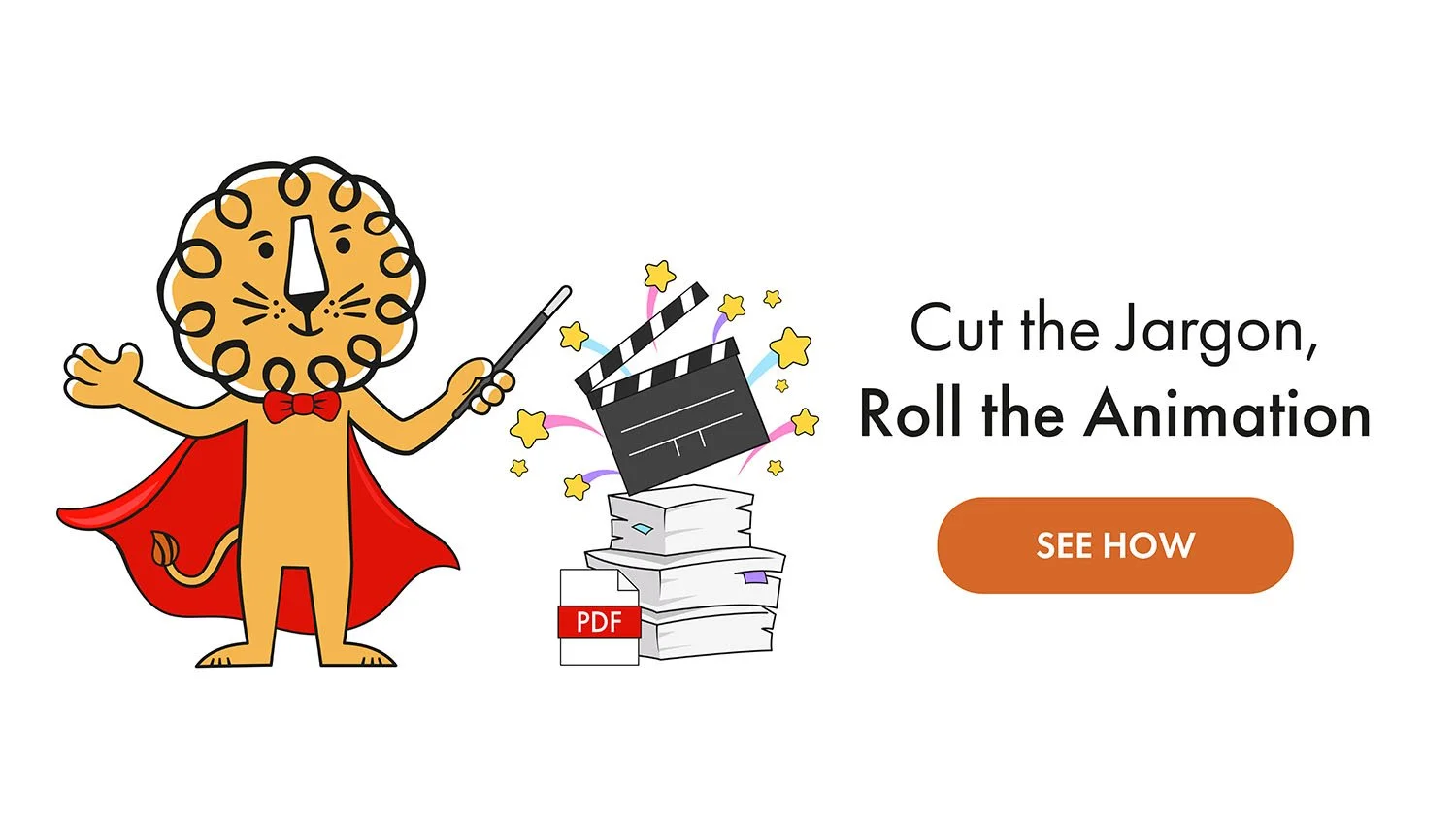
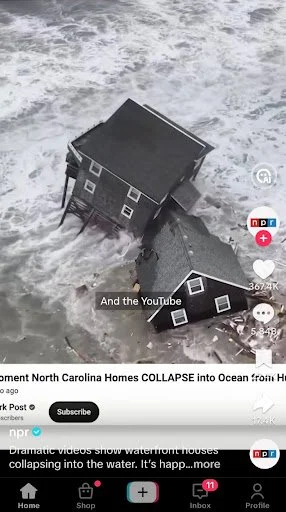
TikTok and Facebook: NPR on the houses falling into the sea (almost 4M plays on TikTok, 1.9M views on Facebook)
Houses are falling into the sea. Literally. In Dare County, North Carolina, more than 30 have collapsed since 2020, and about 100 more are threatened by erosion made worse by rising sea levels.
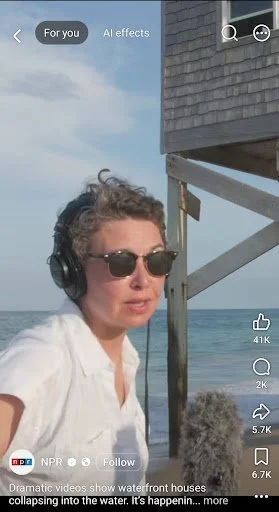
The twist is that FEMA’s flood insurance rules leave many owners with no real choice but to let their homes go. The debris and pollution then close beaches, harm wildlife and leave taxpayers with a big clean-up bill.
The video pairs dramatic footage of collapsing houses with NPR’s reporting, and it topped both TikTok and Facebook. You can watch the TikTok version here.
The most-liked comment is a one-liner: “almost like...the scientists warned us”. Another viewer wrote “Very great reporting! long content does work when it’s terrific.” Facebook, with over 1,500 comments, went into problem-solving mode. One commenter said “Don’t build on a live dune,” and another had a more creative idea: “Seal the bottom floor and turn those into houseboats!”
Twitter (X): UNICEF on baby Asante (over 100K views)
One baby. One story. Under 100 words.
UNICEF’s post, from 17 October, opens with “At just two weeks old, Asante’s life turned upside down.” She lost both parents amid the Ebola outbreak in DR Congo and caught the disease herself. Then comes the turn: “But her story didn’t end there.” She survived, and her recovery has been marked by weekly visits to a UNICEF-supported hospital, thanks to her foster mother, Francine, who says “Today, seeing her smile makes me feel good.”
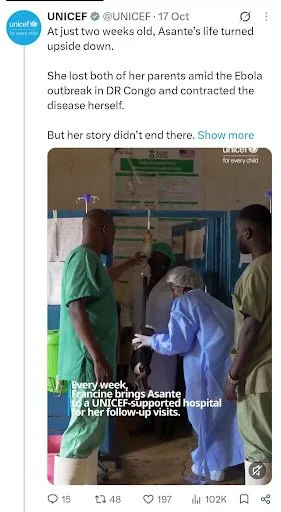
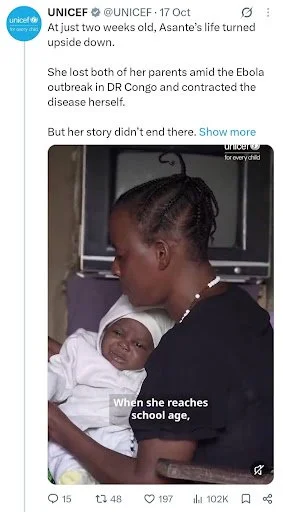
The post comes with a 52-second video, in which a nutritionist says Asante’s story makes the team proud.
Most replies were short. “So beautiful,” said one.
It works because UNICEF stays in the background. It’s only mentioned as the supporter of the hospital, so the post reads like Asante’s story rather than a fundraising ask.
Instagram: NPR and TED Radio Hour on stress and grey hair (over 50K likes)
Can stress-grey hair go back to its old colour? According to this reel, yes, at least temporarily.
In the reel, posted on 23 October, TED Radio Hour host Manoush Zomorodi talks over split screen with Martin Picard, a professor of behavioural medicine at Columbia University. It started, he says, when his partner spotted one long hair that was dark at one end and white at the other.
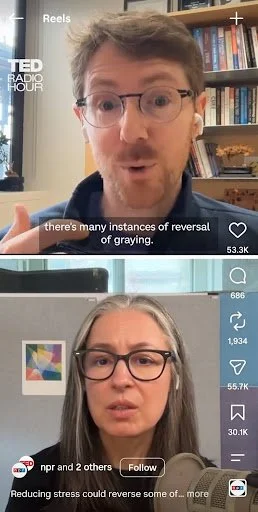
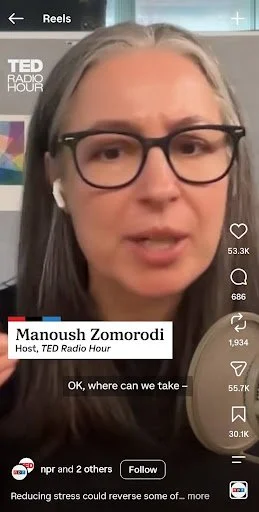
His explanation comes down to mitochondria and energy: stress uses energy up, so cells may stop spending it on luxuries like hair colour. The headline on screen puts it plainly: “Graying hair, it turns out, is reversible.”
The comments were half personal stories, half jokes. “Mitochondria is the powerhouse of the cell” became a running gag. “Kudos to anyone able to reduce stress while still living in the current timeline,” wrote one commenter. Another added “Ungray my hair? In THIS economy?!” And a third said “Going gray is one of the most empowering things I’ve ever done and I love the gray.”
YouTube: TED-Ed on not brushing your teeth for a year (over 1.2M views)
Skip brushing for a year and the wrong microbes move in.
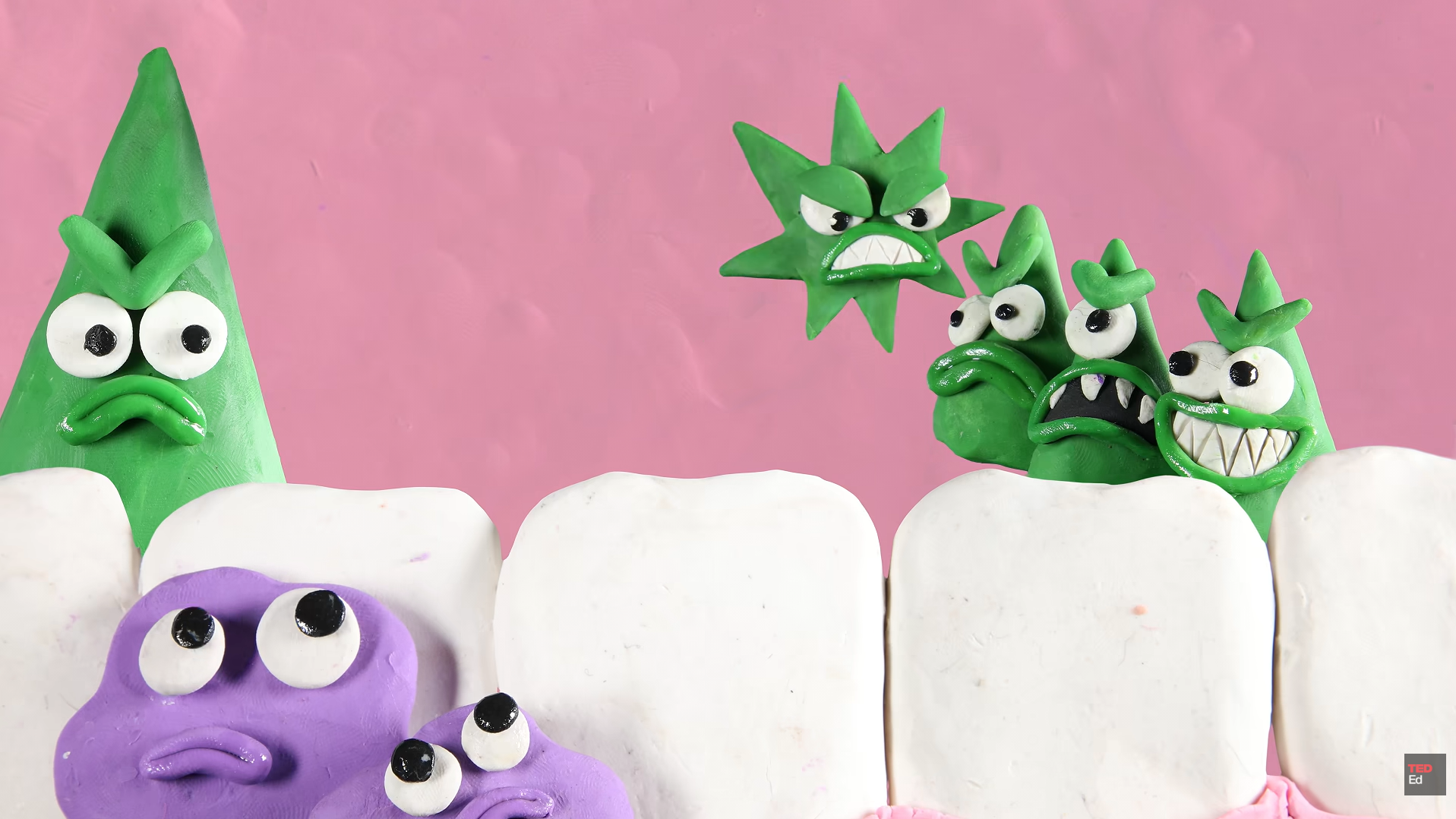
Released on 29 October, this TED-Ed lesson asks what would happen if you gave up brushing and flossing. Your mouth is home to hundreds of species of microbes, normally kept in balance. Stop brushing and the harmful ones can take over, leading over time to tooth decay, gum problems and wider health effects.
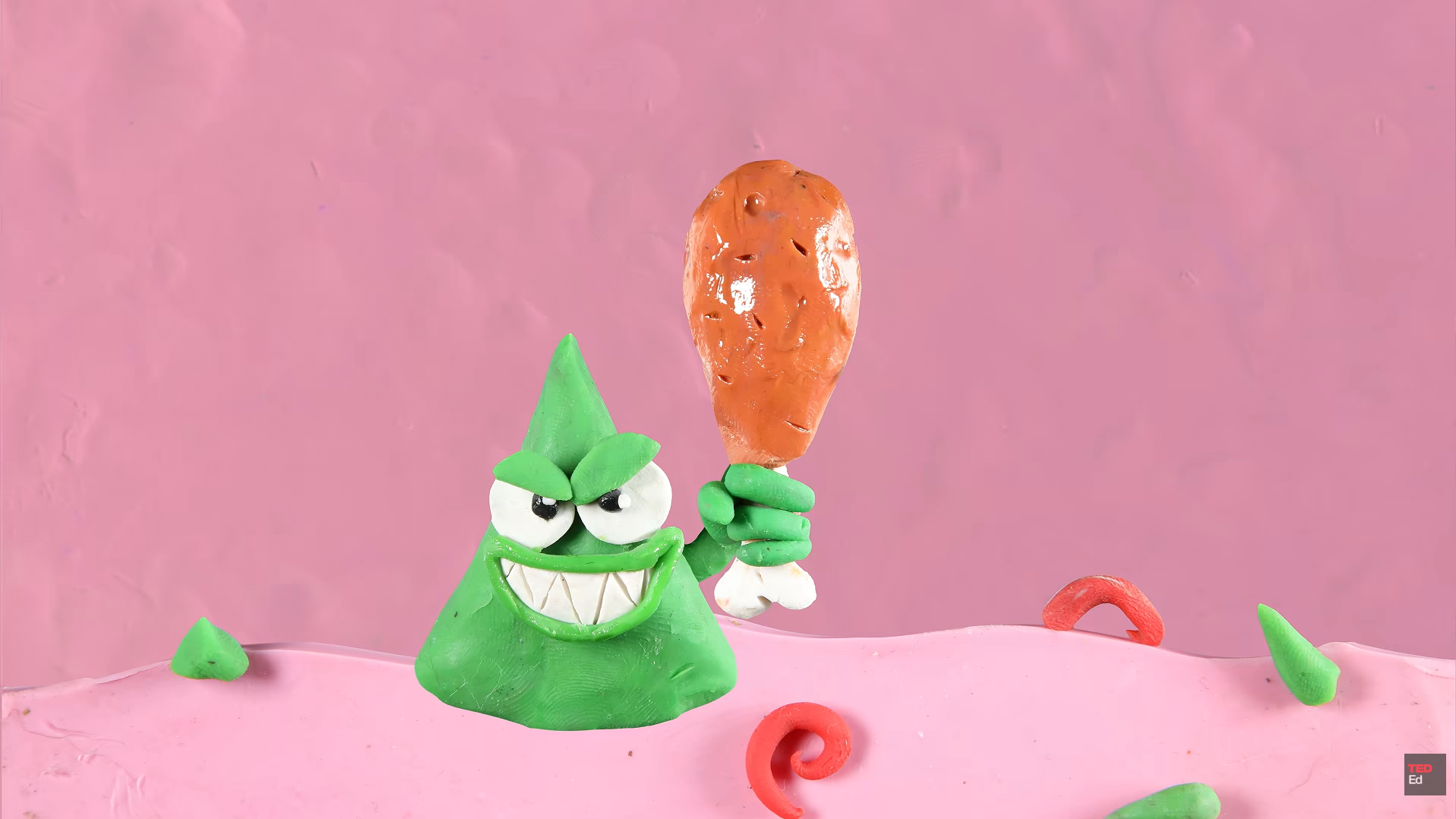
It’s clay animation, directed by Lee Oz and Eliška Oz at Oz Animation, and narrated by Addison Anderson. Clay is a smart choice for a gross topic: squishy plaque is a lot easier to watch than the real thing.
The comments are warm and funny. The top one (over 2,000 likes) says “This is gonna terrify my nephew into brushing his teeth thank you.” Another calls it “oddly charming”, and a third asked “Okay. Cool. But what if I started brushing?”
Over a million people chose to watch a lesson on dental hygiene. That’s the job we do for charities and the NHS. See our healthcare animation work.
LinkedIn: WHO on World Mental Health Day (almost 9,000 reactions)
WHO kept it simple: a flat illustration on a purple background, with seven smiling figures walking in a line, two of them with their arms around each other. Above them, the headline reads “Nearly 1 in 7 people live with a mental health condition.” Seven figures, one in seven. We doubt that’s a coincidence.
The line underneath reads “Get to know them better; bring them in the team.” The caption says people with lived experience can help shape mental health care at every stage, from designing services to improving them.
It’s a good example of a simple illustration carrying a heavy subject. Professionals added their own thoughts, including a student support director who wrote “A student’s mental health story shouldn’t restart at every handoff between providers.”
More on mental health from WHO: “I Had a Black Dog”, their animation about living with depression, is number one on our best nonprofit videos of all time, with over 12 million views.
Nonprofit video is doing the heavy lifting
Video topped five of the six platforms we checked (NPR’s coastline video won on both TikTok and Facebook), and the sixth was an illustration. Short, simple video won whether it was reporting, a personal story or an animated lesson. That’s why we make charity animation: complicated causes explained in under a minute, in a format people actually watch.
How can charities improve their social media strategy? Steal these three lessons
Tell one person’s story. UNICEF could have led with outbreak numbers. It led with Asante instead.
Open with a fact people want to pass on. Grey hair that turns dark again? One in seven people? Those are facts people repeat over dinner.
Give people something to add or argue about. NPR’s posts turned into debates, and the grey hair reel turned into personal stories.
Thinking about a nonprofit animation for your own cause? Making complicated things easy to follow is our job. Say hello to our charity animation studio.
You may also like our best nonprofit social media accounts on Instagram, our top 10 nonprofits across social media and the latest of our monthly best nonprofit animations.